September 26, 2014 in Hyperallergic
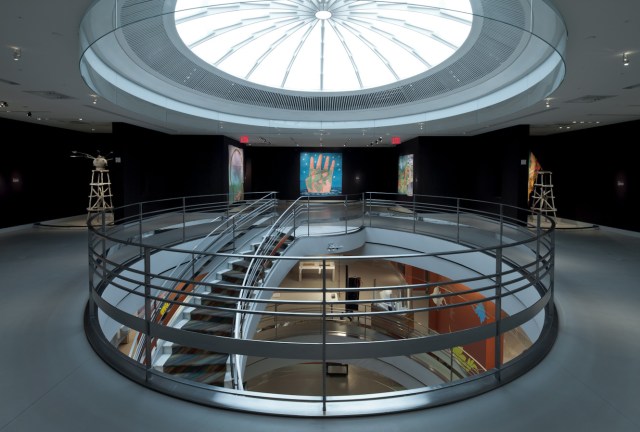
 A view of the Clemente installation with Clemente’s “Hunger” (1990) on the right, 93 1/2 x 96 1/2 in., Philadelphia Museum of Art: Partial and promised gift of Marion Boulton Stroud, 1991(click to enlarge)


 New aluminum sculptures by Francesco Clemente (left to right), “Earth,” “Sun,” “Moon” (all 2014), Courtesy of the artist and Mary Boone Gallery, New York
 Drawings from Francesco Clemente’s Sixteen Amulets for the Road series (2012–13), Courtesy of Francesco Clemente and Thomas Ammann Fine Art AG, Zurich
 Francesco Clemente, “Moon” (1980), gouache on twelve sheets of handmade Pondicherry paper joined with handwoven cotton strips, 96 1/4 x 91 in.The Museum of Modern Art, New York. Gift of Alan Wanzenberg in honor of Kynaston McShine, 2012
August 7, 2014 in Hyperallergic

New York’s art world seems to be experiencing a newfound love affair with art made by hand — art that has, dare I say, “craft” in it. We saw a passing flirtation with knitting when the Rosemarie Trockel show at the New Museum teased us with needle possibilities. Glass was “in” for a while — the SOFA art fair came from Chicago with a focus on glass in the late 1990s and changed the landscape for artists working in that medium — but now it’s “out” (SOFA shut down in New York in 2012). Recently, there’s been a professed love of sculpture made of clay, a form that’s been around since the mid 1950s and is now the flavor of the week: witness the 2014 Whitney Biennial, which included a lot of it, as well as a retrospective for Ken Price at the Met last year and a showing of Sterling Ruby’s huge clay works (among others) at Hauser & Wirth this summer.
The latest craft art making a strong appearance is embroidery, at Robert Mann Gallery, which has mounted a stunning exhibition of artists who embroider on top of photographs. Curated by Orly Cogan, who has included herself in the show, The Embroidered Image features the work of 11 artists who have found creative ways to meld two unlikely mediums.

Hinke Schreuders has taken what appears to be 1950s advertising images of women, adhered them to linen, and added abundant embroidery in a way that heightens the kind of surreal glamour of the photos. The embroidery drips across the pictures and around the sides of the canvas — abstracted bubbles and flowers, embroidery that resembles old-fashioned brocade, drift in and out around the images. From afar the thread creates a sense that these women are behind veils of color and pattern; up close the dimensionality of the surface cause the two mediums to pop apart and you become aware of both the handiwork and the photos underneath
Not all of the works achieve this electricity between materials. Matthew Cox’s embroidered found X-rays don’t quite transcend the physical and conceptual gap between the films and thread, and the sewn decoration of dancers’ costumes by Jose Romussi isn’t as inventive as some of the other pieces in the show.

By contrast, Flore Gardner’s and Jessica Wohl’s use of found images and the ways they embellish the narratives in them are knockouts. Both have chosen photographs of the basic things that we use the medium to document in our lives: marriage, children, friendship. Iconic and ordinary at the same time, these are the images that can be found by the millions in scrapbooks and shoeboxes across the US. The artists have then embellished and complemented the sentiments of these photos by sewing traditional embroidery stitches-satin, like running and cross (to name a few), on top of them. The results dive into the soul of each image and draw it out through the threadwork on the surface. They are psychologically riveting.
All of the artists in The Embroidered Image are essentially working in a form of collage, layering one medium on top of another. They’ve also chosen to work with photographs that were once intensively handmade and now carry a whiff of nostalgia. Add to that embroidery, with its societal references to domesticity, intimacy, and femininity, and you get an exhibition that is at once beautiful and woven with artistic and cultural tension.
The exhibition is also interesting in the larger context of the “maker” and “DIY” movements that are currently in vogue in the art/craft/design world. The current biennial at the Museum of Arts and Design, NYC Makers, seeks to celebrate those who make things “through exquisite workmanship and skill.” It feels as if, with our lives so digitally based, there’s a strong desire to capture and reinvent the tangible presence of the artist as maker.

The Embroidered Image is a mash-up of a different sort. In layering two forms of handicraft atop one another, the exhibition creates a third medium. The work is “mano a mano” in the literal sense of the expression: “hand to hand.” In a time of sometimes indiscriminate and forgettable high tech, it’s a delight to revel for a moment in work of such exceptionally high touch.
The Embroidered Image continues at Robert Mann Gallery (525 W 26th Street, Chelsea, Manhattan) through August 15.
posted in Hyperallergic ,August 4, 2014
 Amy Sillman, “Me & Ugly Mountain” (2003), oil on canvas, 60 x 72 inches, collection of Jerome & Ellen Stern (photo by John Berens)
ANNANDALE-ON-HUDSON, New York — Walking into the Hessel Art Museum at Bard College, an unremarkable contemporary building on a quiet Hudson Valley college campus in Upstate New York, I was unprepared for the dynamite lurking within. The Hessel is the local stop for a massive mid-career retrospective of the work of Amy Sillman. First things first: This is an important show and one that should have been booked in New York City, not 100 miles north where its viewership will be limited by geography.

Sillman became well known in the early 2000s for her deadpanned skewering of the New York art world in the form of little, droll ink and wash drawings, anxiety-ridden lists of attendees at dinner parties and spot-on one-liners exposing the bullshit of the art business. The show travels from these early, arguably light, observational drawings into a deep, exquisite and emotionally naked exploration of painting and drawing. It showcases an artist with a brilliant and restless mind as well as a killer sense of humor. Sillman is both a savvy student of art history and one who breaks ground in a variety of media. Her retrospective moves seamlessly and in full command through drawing, painting, iPhone composed animation, zines, and the artist’s own curatorial work — all with a lightness of touch I found deeply moving and tremendously impressive.

I especially admire the way in which Sillman has embraced the late 20th century struggle between figuration and abstraction and come out the other side with work that is both unique and refreshingly new. Borrowing colors and brushstrokes from Abstract Expressionist painters like Willem De Kooning and Hans Hoffman, she is a master at depicting a world where things are both “something” and “not something.” From the early more lyrical paintings like “Me & Ugly Mountain” (2003), a seemingly straightforward narrative work that carries its seeds of subversion in the large sack/mountain of abstract images dragged behind a sole melancholy female figure. Sillman then jumps with both feet into works like “Elephant” (2005) and “A Bird in the Hand” (2006). In these pieces the narrative is still there, peeking out at us from behind a joyful and passionate love affair with abstract paint and vibrant color. Teasing the viewer with hints of a story — a hand, a bird, a shape we know — that might be something … or something else.
 Amy Sillman, “Elephant” (2005), oil on canvas, 78 x 66 inches, Collection Nerman Museum of Contemporary Art, Johnson County Community College, Overland Park, KS, Gift of Marti and Tony Oppenheimer and the Oppenheimer Brothers Foundation (photo by Gene Ogami) (click to enlarge)
Titles and word play always serve an important role in Sillman’s work, and they toy with the viewer’s expectations and response to the works. Plays on words, and hints about what the painter has in mind are distilled to their essence. A painting entitled “Plumbing” works on many levels simultaneously — The plumbing of a home, the plum-bob of a surveyor, or plumbing the depths of a psyche? All of these course through my mind as I look at this richly painted canvas, and each meaning works in its own way. The biggest hint is one lonely arm, holding a hobo’s sack that flows out of the middle of the image. The psychological possibilities here are boundless and fascinating. This dance between possible meanings happens over and over again in Sillman’s work, and it’s provocative in the best sense of the word. The show’s very title, One Lump or Two, works on several levels as it could refer to the art world school of hard knocks, the sweetener in one’s coffee, or simply a form or shape.
 Amy Sillman, “C” (2007), oil on canvas, 45 x 39 inches, collection of Gary and Deborah Lucidon(photo by John Berens)
The Hessel exhibition includes several extensive collections of earlier small drawing/paintings, the stepping-stones to the big issues expressed in later paintings. Lined up on long shelves across the galleries, they form a Jungian narrative, cartoon strips of the psyche. Both dreamily symbolic and expressly concrete, they show a multi-tiered narrative of humor, and ambiguity that is beginning to morph into shape and gesture. The drawing is delicate, reminiscent of Mughal painting and natural history drawings of the 19th Century. And as always, color is the co-conspirator in these works. Nothing is ever neutral in a work by Amy Sillman. Everything in this show is charged with urgency, commitment, and an intellectual curiosity that walks hand-in-hand with a sensualist’s abandonment of intellect for feeling. It is this constant tightrope walk, between myriad artistic pushes and pulls, that makes Sillman’s work so consistently interesting.
 An installation view, including (left to right): “Trawler” (2004), collection of Arthur Zeckendorf; “PS” (2013), courtesy of the artist and Sikkema Jenkins & Co.; “Unearth” (2003), collection of Barbara Lee, Cambridge, Massachusetts; “Ocean 1″ (1997), collection McKee Gallery, New York; and “Good Grief” (1998), collection of Dr. and Mrs. Lawrence Kessler.
In its scope and ambition there are pieces in this show that spoke to me more than others. That’s to be expected in an exhibition of this size. The early art world cartoons I find amusing, but a little light, like one liners — they bring a knowing smile but are quickly forgotten. They do act as an interesting bridge to the work that comes later. But the depth and breadth of Stillman’s mid-career retrospective displays a tremendously self-confident artistic voice tempered by a deep respect for the artistic traditions. on which she has built. I see echoes of 19th Century German landscape painting, a great love and understanding of Abstract Expressionism, a nod to German Neo-Expressionism, and reference to Bay Area Figuration. As artists we all look to the past to understand what might resonate into our artistic present. It is the rare artist who is able to both synthesize and transcend tradition and to create work that is at once deeply rooted and profoundly fresh.
Amy Sillman: One Lump or Two continues until September 21 at the Hessel Museum of Art (Hessel Museum of Art, Bard College-Center for Curatorial Studies, Annandale-on-Hudson, New York)
 George Adams Gallery has mounted an exhibition of the work of George Ohr and Ron Nagle. Each had been known, in their time, for making work deemed groundbreaking and “outrageous.” George Ohr worked in the early 20th century, and turned pottery on its head, making vessels that toyed with all the traditional notions of pottery. He mixed glazes with wild enthusiasm, creating colors and textures that literally had never been seen before.
Ron Nagle has been making outrageously beautiful sculptures since the early 1970’s. They inhabit a universe unto themselves, adhering to a logic that only they (and Nagle) understand. Small and precious they take the idea of vessels, in particular cups, and work and re-work the concepts inherent in the idea of a ‘cup’ until abstraction overtakes the object. The surfaces are delicately airbrushed with layer upon layer of thin veils of color. The sculptures pulse and glow. Often there is the thinnest thread of hard edge brilliant color that runs along a plane of a sculpture. Blink and you miss it. Blink again and it suggests a shape emerging out of the mass of glaze that you never imagined was there.
Pairing the two is in concept an intriguing conceit- both artists work on a similar scale and both play with the idea of vessel. But in this match up of the two, I’m sorry to say, it is Nagle’s work that really stands up over the years. The Ohr pieces look very tame and very much like pots next to Nagle’s sophisticated visions. For the most part the gallery has paired two to a pedestal, which creates a gentle give and take between the objects, but they never electrify one another. It’s the Nagles that command attention and it’s a real treat to have the opportunity to see these pieces in all their New Wave glory.
Ron Nagle, George Ohr- Look Closer, Look Again -George Adams Gallery
525-531 West 26th Street www.georgeadamsgallery.com/ Exhibition continues through June

Meryl Meisler, “The Village People Stepping Out” (The Grand Ballroom, Manhattan, June 1978), and detail of “Three Amigos” (Bushwick, Brooklyn, 1983) (all images courtesy the artist)
In the late 1970s and early 80s, Meryl Meisler, then a young photographer and self-described club kid, began documenting the bacchanalian nightlife of the city’s most notorious downtown clubs. In the early 1980s, as a New York public school teacher, she also started photographing the near-total devastation of Bushwick, Brooklyn, a neighborhood looted, burned, and abandoned by the city and its landlords. The resulting dual body of work is now a stunning book and exhibition, opening on Friday, May 30 at Bizarre Black Box in Bushwick.

Meryl Meisler, “Wild Wild West Cowgirl at Rest” (Hurrah, Manhattan, March 1978)
The juxtaposed imagery of Meisler’s two worlds is mesmerizing. Arranged in pairs, the photographs echo one another in ways both emotionally compelling and visually fascinating. In “Three Amigos” (Bushwick, Brooklyn, 1983), three young men pose triumphantly in front of a boarded-up building covered in graffiti. On the opposing page three members of The Village People exit a club in full, iconic regalia. Drag queens pose invitingly, mirrored by cheerful giggly teenage Bushwick girls in an eerily similar stance. Two worlds, so close and so distant, married by a single, discerning artist’s lens.
Meisler shot the club world primarily in luminous black and white. The resulting high-contrast prints depict a world going gleefully to hell. The photos are raw in both contrast and content, capturing a soulless hedonism. Everyone is having “fun,” but when you look closely, the fun is hard to find.

Meryl Meisler, “Turquoise Ring” (Studio 54, Manhattan, August 1977)
The Bushwick photos were shot with a cheap camera and 35 mm color slide film, then transferred to prints. Meisler’s process yields images with a rich warm glow. The saturate colors of life in Bushwick belie a desperately poor and hard-edged world, but somehow a visual warmth blankets in the content of Meisler’s photos. Though never sentimental she conveys empathy and generosity towards her adopted neighborhood.

Meryl Meisler’s “Elbows at Angles” (Infinity, Manhattan, August 1977) and “Two Girls Strike a Pose” (Bushwick, Brooklyn, June 1986)
This exhibition is a terrific document of life in NYC during an era past. At the same time it serves as a potent metaphor for life in post- Bloomberg NYC . Bushwick is no longer burnt out, and the Manhattan club scene is long gone, but New York remains a tale of two cities. Ironically Bushwick, now too pricey for many of its historic residents is now a haven for artists, galleries and foodies, themselves displaced by a Manhattan of oligarchs and overpriced real estate. Thirty years later, and still the best of times and the worst of times.

Meryl Meisler, “Roller Skates” (Bushwick, Brooklyn, circa 1984)

Meryl Meisler, “Prom Queen Contender” (Les Mouches, Manhattan, June 1978)

Meryl Meisler, “High Hat Hands Raised” (Bushwick, Brooklyn, April 1982)
A Tale of Two Cities: Disco Era Bushwick runs May 30–September 10, 2014, at Bizarre Black Box Gallery (12 Jefferson Street, Bushwick, Brooklyn). There will be a Disco Night Opening Reception on Friday, May 30, 7p–4a, with performances and special events throughout the weekend. A monograph of Meisler’s work will be published in conjunction with the show.

Tagging gets its due at The Museum of The City of New York

The exhibition, in a tightly packed installation, showcases the famous “black books,” bound sketchbooks that young street artists used to work out their scripts and drawings before hitting the subway cars with spray paint. Martin Wong bought over 50 of these books from the artists, and the exhibition shows them off in referential glass cases that belie their subversive intentions.
Street signs, graffiti on canvas, clothing and many wonderful documentary photos from the 1970’s and 80’s round out this show in an attempt to convey some of the gritty roots of this artwork. Pieces by Futura 2000, Ikonoklast and Sanesmith are real standouts. These artists show their terrific sense of design, creating fonts and drawings that give understanding to the ways in which graffiti writing and culture affected mainstream design.
But for me, the biggest delight is how this show acts as a nexus for community engagement. On the bitterly cold Saturday that I visited the museum the galleries were packed. Young street artists showing their portfolios to whomever wanted to look, parents eagerly introducing their children to art works that they perhaps shuddered at seeing thirty years ago on a train car. Two serious old school graffiti artists- Sharp and William Nic-One Green were in residence, chatting up gallery goers about their work and giving impromptu history lessons about life in the city in the 70’s. Rarely have I seen a museum show so abuzz with conversation and life. After a lively conversation with the gents about their views of the dubious “cred” of Keith Haring and Banksy as street artists, I turned to leave the gallery and saw a line of people waiting to get in; the line stretched down the length of first floor of the museum and around a corner. This is an exhibition that has really struck a chord for New Yorkers. Personally, the show made me a little nostalgic for the “bad old days” of New York, when the brilliant blurs of moving subway cars enlivened what was admittedly a more dangerous and dirty city. But a city where an authentic and totally original art form could be born and thrive, literally in the streets.
“City As Canvas: Grafiti Art from the Martin Wong Collection” through August 24 at Museum of the City of New York. http://www.mcny.org/
Ma! is the word I’ve heard most commonly everywhere in Israel. It’s literal translation is “What” but it has many other more subtle translations, the most common of which is “What the fuck?”. It’s a place holder, to use while you’re considering what to say next. It’s a sly request for more information, spoken in a purr it’ s like “Tell me more, darling” It can be a term of agreement, as in ” Yeah, I get it” but mostly I’ve heard it used in the first way…..”Get outta my way”, “Are you insane” and ” I’m getting in line in front of you, even though you’ve been waiting patiently in the Post Office for an hour”. One of the many things I’ve learned during six weeks in Israel. Here are a few more:
Israel is not America ( really?). Despite America’s obsession with Israel and Israel’s keen awareness of all things American, it is in fact a Middle Eastern society. I noticed this most on the street. Walking down the street in NYC , I make eye contact, I smile at people, I help blind people , I smile at children. A real freakin’ boy scout. Here, no one makes eye contact on the street. Especially men and women. Smiles are met with a look of suspicion if not hostility. I learned not to take it personally, but it saddened me a bit. Here’s a snap of Rami, a motorcycle mechanic near the studio who always smiled and chatted with me…..Even after I told him that I was married, he continued to spread a little sunshine on the street.

And my buddies at La Rampa. These gents make a mean cuppa joe, always have a smile and a wisecrack for me. They seem to think that I am a weird exotic bird that has temporarily landed in their Universe. They may be correct.

I took the bus to Jerusalem. Traveling by public transportation is great. Buses pick you up and drop you off where ever you want. There are bus stops, but we don’t let that detail control us! The only down side is that the driver can play whatever music he wants -very loud. You also get to hear him to speak on any one of the three cell phones that he juggles whilst driving. It’s cheap and it gets you there. I walked from the bus station with this lovely gent from Iran. He spoke not a word of English, nor much Hebrew. Nonetheless we chatted as we walked, smiling and nodding in a gentle bubble of mutual non-understanding. He wore a great deal of gold around his neck.  Portraits of his children, I think. Bling bling Iranian style.
Here is a detail. He was very happy and proud to show me and in fact asked me to take his picture  . Jerusalem is beautiful. A stunning world class museum- The Israel Museum. A really edgy, brilliant contemporary art museum called The Seam. It’s right on the “seam” between east and West Jerusalem and devoted to showcasing political and socially relevant art. The current show is about the notion of Loneliness, and it’s very moving. There’s ancient history. A terrific art school. Good restaurants. Elegant neighborhoods. And lots and lots of soldiers and tension. When I arrived the bus station was in full scale bomb alert. They take that pretty seriously in Israel. It’s sobering and a million miles away from the fun and funky world of Tel Aviv. I found the city very sad. But here’s some snaps of Arab school girls at the Israel Museum, taking pictures of each other and blissfully ignoring their teacher. Some things are the same the world over.


And a magical moment. While in the Nougichi sculpture garden I wandered into a breathtaking James Turrell room. Pink stone, blue sky, brilliant golden light. And happily crawling on the cool floor was a baby. Her mother watching joyfully from the side. The three of us smiled, gurgled and basked in the glorious room.


I saw no street art in Jerusalem. Perhaps it’s not part of the culture. Perhaps it gets painted over, since J Town is a major tourist site.
Sadly driving IS a contact sport in Israel. I’ve seen more car accidents, or the aftermath of, in six weeks than I have in my entire life. Some bad ones. I saw a cop car run into the side of a building and a pedestrian run over by an electric bike. Which, since you asked, are allowed to ride on the sidewalk. It’s stupid, crazy, insanely dangerous and and should change. All two wheeled vehicles- bikes, electric bikes, Vespas, motorized skateboards careen down the sidewalks in Tel Aviv. It is your responsibility to jump out of their way. No bells, no nothin’ warn you that you are about to be mowed over. I watched a teen with two broken arms, on a skateboard run into an ancient old woman carrying her groceries. Maybe he broke another limb. It would have been a bit of Old Testament Justice, fur shur.
Israelis are obsessed with many things. Everyone says that they are sick of politics and then proceed to passionately dive in, again. It is a very intense place. My keen political analysis of the situation boils down to several issues……..Israelis are deeply invested in the music of Lenard Cohen. Every home I went into was playing his dreary dirges ( there, I betray my own prejudices) I find this problematic and feel that perhaps if we could encourage a move away from LC it could positively affect the peace process.
I find another second cultural investment less problematic. That is is the man himself- Robert “Bob” Marley. Every taxi cab plays Bob’s music. Teens on the beach wear flowing pants emblazoned with his image. Dreadlocks abound ( and yes they even look stupid on young and beautiful Israelis). The market is draped with these pants in all their polyester glory. I feel that we should encourage Marley, discourage Cohen.


Do I have other, perhaps more relevant ideas about the political situation in the Middle East? You betcha!!!! Am I going to post them on the Inter-web? Nope. Invite me out for a glass of wine and I will happily expound, like everyone else, about what Israel should and shouldn’t do and be. No problemo.
Check out these drawings. It is, after all, a democratic and uncensored country…..


So many more snaps of street art. I will post some on their own……
As seen in store windows throughout Te Aviv- Pride week comin’ up, yo.
The Spring flowers are amazing. After a week of tremendous unexpected rain the countryside burst open-


And finally- While in Jerusalem I went to Ammunition Hill, the site of a crucial battle of the 1967 war. I found a plaque honoring my father’s service in Europe during WW ll . It made me happy. It made me sad. A lovely and tender site. Rarely visited by tourists. Mostly a place where schoolkids are taken on trips to learn about the nation’s history.

It’s been six weeks. I’m tired and tan and full of new thoughts…….Home again, home again, jiggity jig……..
Napoleon meet Rabbi Nachman… What? Now there’s a historic meeting that would have been fun to witness. Yup, Napoleon invaded Palestine, attempting to capture the stunning and strategic city of Akko. Having heard about this, and that Akko is a World Heritage Site and that it’s a Christian Arab, Muslim Arab and Jewish city built on a thumb of land that juts out into the sea and that everyone in history seemed to want to invade it – well seemed like a road trip was in order. Took the train- (traveling by train on cushy double decker trains in Israel is def. the way to go). Met the lovely Mark Yudell, my companion for the trip at the train station on one of the most beautiful days in the Universe and we were off to explore……..
So Akko is actually awesome. It’s walled port-city that has been continuously occupied since the Phoenician period. The remains of the Crusader town, dating from 1104 to 1291, lie almost intact, both above and below today’s street level, including a wild maze of escape tunnels designed to let those in the walled city escape to the sea. More on that later….The present city is classic Ottoman from the 18th and 19th centuries. If you look at it on a map it becomes obvious why everyone wanted to own Akko. It’s a perfect port and a perfect strategic location from which to control the coast. There is a modern part of the city , outside of the ancient walls, but we’ll ignore that.
Akko is a magical, peaceful place inhabited by people of many faiths and what appears to be thousands of cats. The local feeling is that in a port city you have rats. if you have cats there are no rats. Makes sense to me. Winding ancient streets that double back on each other lead you around and around and eventually everything leads to the sea. The city is off the tourist trail and as a result feels special and somehow private. The coffee is superb. Enough chat. Here are some snaps- Coffee bar, Akko Style. Extraordinarily good coffee, served with side dishes of baklava and pickles. A taste combo I never need to repeat.
Most of the shops are decorated with historical and personal pictures, leading to some incredible combinations…..


Sign at a fish monger’s shop….Damn, I love this drawing….

The Old City has a beautiful little Mosque ( little is a relative term when it comes to Mosque size) It’s claim to fame is that the Mosque contains a hair from Muhammad’s beard. And I want to say to the French tourists who angrily refused to pay the 10 shekel entrance fee ( about $3.00) Really? And did you have to be so damn rude about it? 


 Every Mosque should have a cat in a basket!
Kids riding ponies bareback thunder down the street, Orthodox Jews shopping in the market next to veiled and robed women. Stores with equipment that looks 100 years old making things out of copper and tin. Tis’ truly a marvelous city.
We descended into the Crusader tunnels – they wind underneath much of the city, clever escape routes for a besieged army. Some of the tunnels are about four feet high, arched tunnels perfected constructed. It’s a little mind bogging to think of how they were been built. The floor of one tunnel actually fills with sea water as you get closer to the sea. Akko is layer upon layer of history. We came upon these two gents who were actually bricking up a tunnel. Upon questioning we learned that an entire new part of the ancient city had been discovered but the funds to properly excavate it weren’t available, so they were closing it back up to preserve it. These guys had been working in the tunnels for 22 years….. Meanwhile, above ground. The seawalls, seafood restaurants cling to the side of the city, the sea lapping up against them.
 Sweets, fish nets, street posters, seafood, a wall of seashells, shops
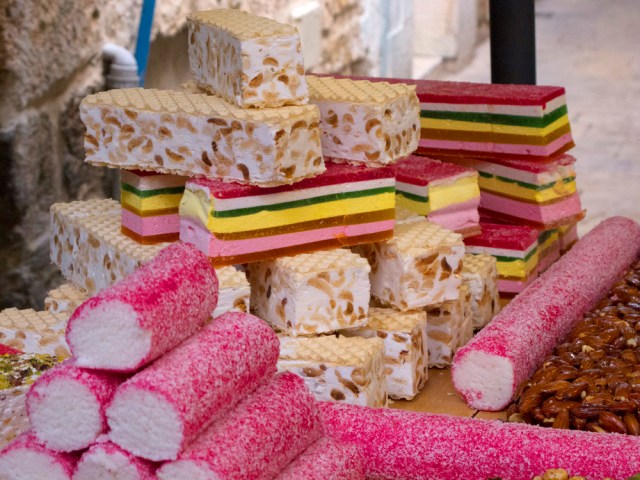

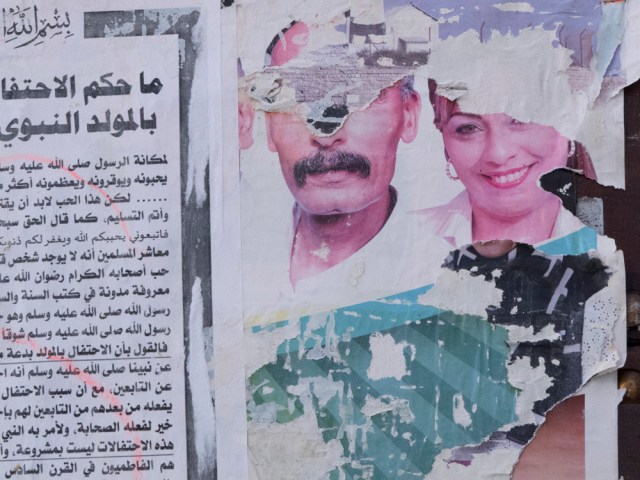


It’s a dizzying array of color, scent and light. A strong breeze blows off the ocean. The sky is a shade of blue right out of a renaissance painting. A perfect respite from my normal uber urban Tel Aviv days, where taxi drivers vie with insane electric bike riders to see who will blink at that moment of contact……..I like Akko.
Yo- I’ve gotten so much feedback about the street art pictures I posted a few days ago, that I’m posting a few more. I now have about 300 images in total….. Planning to make a bigger project out of the whole mess. Stay tuned, and thanks so much for takin’ a look!
No comments, just snaps-


Let me tell you al ittle bit about the neighborhood that I’m working in……I am in an old printing factory which has morphed into the Benyamini Center. On our right is a tee shirt company that prints shirts for the military. The female owners seem to hate everyone, there is a near constant cacphony of yelling from the factory….Next door to them is A La Rampa, the sweetest restaurant in town that regularly hosts Israeli film stars, plays kick ass great music and offers me a Whiskey or an Arak on the house at lunchtime. The restaurant is on the loading ramp of the factory next door to them, hence the name…. a series of unlikely neighbors, for sure. It gets even weirder and more fun….Around the corner is a series of low covered buildings that houses every kind of early industrial era manufacturing that you can imagine. Some of the machines look 100 years old. In one block I could have things made in wood, steel, copper, glass, vinyl, plastic, get my motorcycle repaired, have something spray lacquered, buy weed, and/or smoke at the corner hooka bar. We are on the edge of a massive neighborhood of Ethipoan and Sudanese refugees. Across the street is Haartez, the opposition ( Left leaning) newspaper of Israel). Next to that are huge ugly 1960’s era concrete buildings that house artists, illegal immigrants, art galleries and clandestine activities of all kinds. Needless to say, I feel very much at home here!
Below are some snaps of my neighborhood-
Benjamini Center

A La Rampa, not in any guidebook. Go there.

The tiny, intense kitchen, preparing my grilled fava beans with olive oil and sea salt, served over polenta and goat cheese dumplings…..

Ugly, slightly scary, piss smelling warehouses across the street-COVERED in Graffiti. I will post separately about this.

ok, some graffiti-


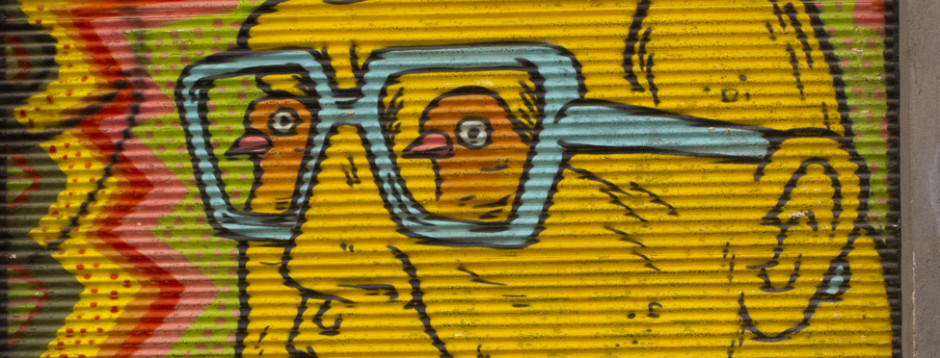
And this is just a tiny number of shots I’ve taken of the street art. One of the things that I love is that the street art is everywhere, not just in show off-y very public sites. It’s in alleys, on the back of dumpsters, the back walls of junkyards. Here’s another fav. of mine. It’s only about five inches tall and is in an alley. The sun caught it in a very pretty way here…..

Here is a shot of a canvas manufacturing shop nearby, every day they move the sewing machines out on the sidewalk to work. But inside is the brain trust, check it out-

Yossi and Erez, the gents I buy dates and nuts from. They think I’m the funniest thing they’ve ever met……

And finally- Meet Dr. Weed. I met this guy as he was driving a car around Tel Aviv advocating the legalization of marijuana. Very cute, very stoned. I salute you, sir and wish you the happiest of days!


Back to work…….( after my shot of Arak, of course)